
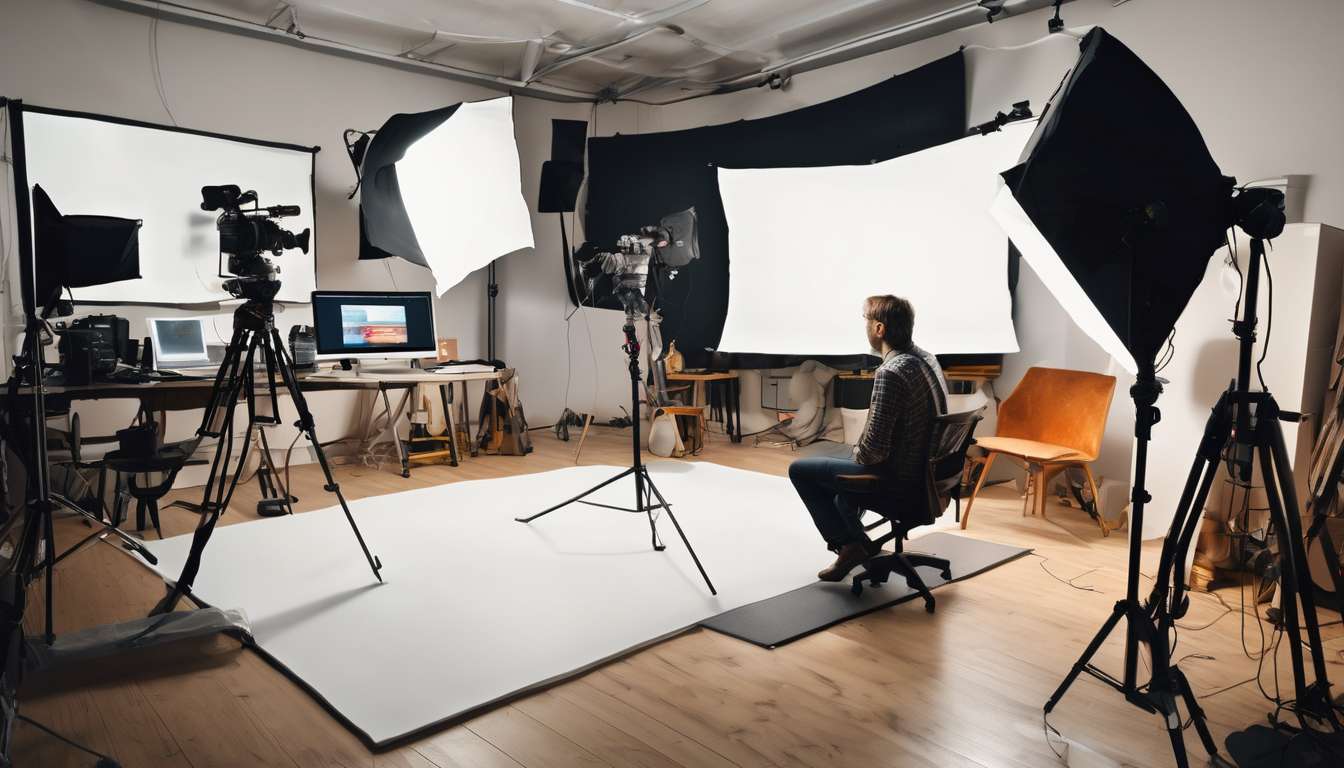
Disciplined studio management elevates every frame.
Diverging from the chaotic shoots many assume define adult photography, a well-run studio emphasizes clear roles, workflows, and standards. When comparing a loosely run set to a coordinated one, the difference is striking: one yields inconsistent lighting, missed cues, and stressed talent; the other produces cohesive imagery, efficient schedules, and confident performers.
We prioritize preproduction planning, communication, and set maintenance because they translate into creative freedom during the shoot.
- Preproduction planning (scheduling, moodboards, equipment lists) ensures everyone arrives prepared.
- Communication protocols (call times, briefings, on-set signals) prevent misunderstandings and lost time.
- Meticulous set maintenance (safety checks, clean workspace, functioning gear) keeps the day running smoothly.
Standardizing processes reduces friction and lets the team focus on craft.
- Implement consistent call times and arrival procedures.
- Use consent documentation and clear agreements to protect talent and crew.
- Follow technical checklists for lighting, camera settings, and backups.
Respectful, professional environments improve collaboration and output.
When talent and crew feel respected, safe, and valued, their expressions and teamwork improve. This professional approach not only raises photographic quality but also strengthens reputations and supports sustainable careers.
Preproduction Planning
We outline detailed shot lists, schedules, and resource assignments to ensure every scene is efficient, safe, and aligned with creative goals.
We build a collaborative plan so everyone feels included and valued, and we prioritize consent documentation from the start, making clear what’s expected and agreed.
Our technical preproduction steps cover lighting diagrams, camera blocking, equipment checks, and contingency plans, so we reduce surprises and respect everyone’s time.
We assign clear roles for on-set support and emphasize talent welfare through rest breaks, private changing areas, and accessible points of contact for concerns.
We keep paperwork organized and accessible, pairing consent documentation with call sheets so permissions are never ambiguous.
We run focused rehearsals and equipment run-throughs to protect comfort and performance, and we document any changes immediately.
By combining precise technical preproduction with humane scheduling and transparent consent practices, we create a dependable environment where contributors feel secure, connected, and confident in the work we produce together.
Clear Communication Protocols
Communication protocols are established so everyone knows how to raise needs or concerns quickly and respectfully.
We specify preferred channels, response times, and escalation steps.
- Preferred channel for urgent on-set issues versus routine scheduling is defined.
- Expected reply windows are set so no one feels left guessing.
- Escalation steps explain who to contact next if an issue isn’t resolved within the expected window.
Technical preproduction checklists are linked to the communication channels.
- Crew confirm equipment, lighting, and sound readiness before arrival.
- Checklist completion is reported through the designated channel to provide audit trails and reduce surprises on set.
Consent documentation procedures are referenced and questions are routed to a coordinator.
- Consent forms themselves aren’t rehashed here; the location and owner are referenced.
- Direct questions about forms to the designated coordinator to keep lines focused and efficient.
Talent welfare is prioritized by naming a single welfare point person on every call.
- The welfare contact is responsible for receiving reports of discomfort or boundary issues.
- Reporting procedures are scripted so concerns can be raised confidentially.
Team communication is trained to be concise, nonjudgmental, and responsive.
- Teams are trained to use concise, nonjudgmental language.
- All concerns receive an immediate acknowledgement of receipt.
Protocols are kept simple, consistent, and inclusive to create a dependable environment.
By doing this, everyone feels seen, heard, and supported.
Consent and Documentation
We keep clear, signed records of permissions, model releases, and usage terms so everyone knows exactly what’s agreed and when changes require reauthorization.
We centralize consent documentation in a secure, accessible system so team members and talent can reference agreements at any time.
We document scope, shoot dates, intended distribution, and any revocation windows, and we update records when usage or creative direction shifts.
We make consent a collaborative process: talent welfare guides how we present clauses, answer questions, and allow cooling-off periods.
- We schedule private review sessions before shooting so everyone feels seen and supported.
- We record any accommodations or boundaries the talent requests.
We tie consent documentation to scheduling and technical preproduction checkpoints without detailing checklist items, ensuring that permission aligns with planned workflows.
- We regularly audit records.
- We keep expiration alerts active.
- We train staff to handle documents respectfully.
This approach builds trust, strengthens community, and protects both creators and talent.
Technical Checklists
We create concise, role-specific technical checklists that ensure camera, lighting, audio, and backup systems are verified and synchronized before every shoot.
Checklists are short, actionable, and assigned so each team member knows responsibility during technical preproduction.
We cross-reference consent documentation checkpoints with timecode and file-naming conventions so legal records and footage stay linked and retrievable.
We include power, media, codec, and sync checks, plus redundancy steps for critical assets.
- Example items:
- Power: confirm batteries charged and mains backup available.
- Media: verify card capacity, formatting, and spare media on hand.
- Codec: confirm recording codec/settings match project spec.
- Sync: verify timecode, genlock, and slate procedures.
- Redundancy: implement dual-record or relay backup for critical sources.
We run a brief run-through where photographer, audio engineer, and production assistant confirm settings together, reinforcing a culture of mutual support.
- Run-through steps:
- Confirm and announce camera/audio settings.
- Perform test recording with slate/timecode.
- Verify monitor/playback and confirm audible/visual cues.
We log deviations and corrective actions so patterns are visible and training targets are clear.
- Logging items:
- What failed, who corrected it, and time-to-resolution.
- Recurring issues flagged for follow-up training.
We frame checklists around talent welfare: ensuring safe, comfortable lighting levels, clear communication of cues, and immediate ability to pause if concerns arise.
- Talent-focused steps:
- Check light intensity and heat; adjust for comfort.
- Confirm talent understands cues and has a safe-signal.
- Ensure quick pause/stop procedure is communicated.
We update checklists after each shoot, inviting team feedback so everyone feels ownership and belonging while technical reliability improves and consent documentation remains integrated with workflow.
- Update process:
- Post-shoot debrief to collect feedback.
- Revise checklist items and assign owners for changes.
- Distribute updated checklist and archive previous versions.
Set Safety and Maintenance
We establish and maintain clear set-safety protocols and regular equipment maintenance routines.
Goal: Keep people protected, gear reliable, and shoots free of unexpected interruptions.
How we do it:
- Create and follow written safety protocols covering on-set behavior, PPE, and hazard zones.
- Maintain regular equipment maintenance schedules for all departments.
- Use checklists from technical preproduction to guide daily walk-throughs.
- Document outcomes of inspections and walk-throughs so nothing slips through the cracks.
We build a shared safety culture where every crew member feels included and responsible.
Practices that reinforce culture:
- Encourage everyone to speak up about hazards or talent-welfare concerns.
- Keep communication channels open and act immediately and collaboratively on reports.
- Practice emergency procedures with the same care as creative rehearsals so responses are calm and coordinated.
We keep consent and access documentation secure, accessible, and current.
Documentation rules:
- Store consent forms and welfare documentation in a secure but reachable location for authorized staff.
- Regularly review and update consent records and access permissions.
- Log who accessed or updated sensitive documents to maintain transparency and accountability.
We schedule routine inspections and preventive maintenance for technical systems.
Systems covered:
- Lighting and rigging
- Audio equipment
- Power distribution and cabling
Maintenance practices:
- Perform preventive inspections and calibrations on a set schedule.
- Log repairs, calibrations, and maintenance actions to limit downtime and track trends.
- Replace or retire equipment before it becomes a reliability risk.
By combining thoughtful planning, clear records, and regular upkeep, we nurture a dependable set where creativity and safety coexist.
Outcome: Fewer interruptions, faster responses to issues, and an inclusive environment where everyone can work confidently.
Talent Care Practices
We prioritize comprehensive talent care practices that keep performers comfortable, respected, and informed throughout every phase of production.
We build trust by centering talent welfare in planning and on-set routines, ensuring everyone feels seen and supported.
- We treat performers as collaborators, which strengthens creative outcomes and the community.
- Clear welfare-centered routines help reinforce mutual respect and higher-quality work.
We use clear consent documentation before shoots so boundaries are explicit and revisited when plans change.
- Consent is documented and updated whenever plans or scope change.
- Documentation ensures everyone knows what was agreed and reduces misunderstandings.
We make time for pre-shoot conversations, answering questions and confirming comfort levels, which fosters belonging and reduces anxiety.
- Pre-shoot discussions provide space to raise concerns and set expectations.
- Confirming comfort levels helps performers feel seen and supported.
During technical preproduction we coordinate lighting, wardrobe, and scheduling with talent needs in mind, minimizing surprises and physical strain.
- Technical plans are reviewed with performer needs and limitations considered.
- Adjustments are made proactively to reduce physical or emotional stress.
We provide reasonable breaks, hydration, and private spaces, and we appoint a dedicated welfare contact who’s available during and after sessions.
- Breaks and basic needs (hydration, private rest areas) are scheduled and respected.
- A named welfare contact is available on-set and for follow-up.
When concerns arise, we respond promptly and adapt plans without pressure.
- Immediate, no-pressure adjustments are made to prioritize wellbeing.
- Responses are documented and communicated clearly.
We document accommodations and follow-up actions to maintain continuity.
- Record agreed accommodations and any changes.
- Follow up after sessions to confirm wellbeing and any further needs.
- Keep records accessible to relevant production staff to ensure continuity.
By centering talent welfare in both planning and practice, we create an environment where performers feel respected, supported, and informed—leading to better creative results and a stronger community.
Workflow Standardization
We standardize workflows so every team member follows clear, repeatable steps that reduce errors, speed production, and maintain consistent quality.
We create checklists that start with consent documentation and talent welfare confirmations, so everyone knows what’s been agreed and who’s responsible for each step.
We schedule technical preproduction reviews that cover lighting diagrams, equipment checks, and contingency plans, and we assign owners to each task to prevent overlap and omissions.
We keep our documentation accessible so crew and talent feel included and informed; this builds trust and a shared sense of responsibility.
We use simple, consistent templates for call sheets, release forms, and safety briefings, so nothing gets overlooked under pressure.
We hold brief daily syncs to surface issues early and to reinforce that each person’s role matters to the group’s success.
By standardizing these procedures, we reduce last-minute stress, protect talent welfare, and produce reliable, respectful shoots that everyone on the team can be proud of.
Postproduction Coordination
Postproduction coordination: We assign clear editors, set delivery milestones, and maintain a shared asset library so edits, color grading, and audio work stay aligned with the original shoot intentions.
Consent and rights: We keep consent documentation attached to each asset so everyone understands release terms and can work confidently without second-guessing rights or boundaries.
Technical continuity: We integrate notes from technical preproduction into edit briefs, ensuring color profiles, sound specs, and visual continuity reflect choices made on set.
Regular syncs and issue escalation: We hold regular syncs where editors, producers, and talent advocates review progress against milestones and raise issues early.
Talent welfare and privacy:
- We prioritize talent welfare by flagging sensitive clips for privacy checks.
- We limit access to those with need-to-know permissions.
File management and versioning:
- We use version control and clear naming conventions so collaborators feel included and know where to find the latest files.
- We document decisions in a central log, creating shared accountability and reducing rework.
Performance measurement and continuous improvement:
- We measure turnaround against agreed timelines.
- We iterate on workflows together, reinforcing trust and a collective commitment to quality.
How should a studio handle disputes between performers and third-party vendors (e.g., wardrobe, makeup suppliers, or location services) that affect production schedules or costs?
We address disputes by listening to everyone involved, calming tensions, and prioritizing safety and schedules.
We document the issue, assess contractual obligations, and seek quick remedies such as:
- swapping vendors
- adjusting timelines
- covering reasonable costs
We mediate directly with vendors and performers to find fair solutions and escalate to contracts or legal counsel only when needed.
We follow up to prevent repeats and keep the team informed and supported throughout.
What insurance policies should an adult photography studio carry beyond general liability to specifically cover content-related risks, performer-related claims, and data breaches?
Question: What specific insurance protects our studio beyond general liability?
Answer — key coverages to consider:
1. Content liability / Media liability
- Protects against defamation, invasion of privacy, copyright infringement, and distribution claims arising from produced content.
- Important for content that may be shared widely or distributed on multiple platforms.
2. Performer liability & sexual abuse/molestation coverage
- Covers on-set bodily injury claims, including sexual abuse/molestation allegations involving performers or crew.
- Often required where intimate scenes or close physical contact occur.
3. Professional liability (errors & omissions)
- Protects against claims of creative errors, negligence, or failure to deliver contracted services (e.g., breach of creative obligations, mistakes in post-production).
- Covers legal defense and settlements related to professional services.
4. Cyber liability & breach response
- Covers data exposures, hacking, ransomware, and privacy breaches involving consumer, employee, or performer data.
- Often includes breach response costs (forensic, notification, credit monitoring) and liability for regulatory fines.
5. Employment Practices Liability (EPL)
- Protects against workplace disputes such as wrongful termination, harassment, discrimination, and retaliation claims brought by employees or contractors.
6. Inland marine (equipment floater)
- Covers cameras, lighting, props, and other production equipment against theft, damage, and transit losses on location or in transit.
7. Contingent coverages & endorsements tailored to adult content
- Consider policy endorsements or specialized policies that explicitly address exposures unique to adult content (e.g., content distribution to adult platforms, modeling releases, age verification failures).
- Ensure policies do not contain express exclusions for adult content or related activities.
Additional practical steps
- Obtain a tailored media/entertainment insurer or broker experienced with adult-content productions.
- Review contractual requirements (platforms, distributors, talent contracts) to confirm limits and coverages meet obligations.
- Confirm limits, sublimits, aggregate exposures, and retention/deductible structure are sufficient for potential claims.
- Maintain documented consent/release forms, age verification records, on-set policies, and security procedures to reduce underwriting friction and defend claims.
If you’d like, I can:
- Draft a one-page coverage checklist tailored to your studio.
- Suggest typical limit ranges and sublimits for each coverage.
- Provide sample policy wording to look for and exclusions to avoid.
How can a studio create and implement a fair revenue- or royalty-sharing model for performers whose images are licensed for extended commercial use?
We’ll start by clarifying the current question: how to craft fair revenue- or royalty-sharing for performers when images are licensed long-term.
We’ll co-design transparent contracts with clear usage tiers, defined royalty percentages, and audit rights.
We’ll set minimum guarantees, timely payments, and escalation clauses for new media.
We’ll include opt-in relicensing terms, regular statements, and an easy dispute-resolution process so everyone feels respected and secure.
Conclusion
You’ve learned how solid studio management raises the quality and consistency of adult photography productions.
By planning thoroughly, communicating clearly, documenting consent, keeping equipment and sets safe, and caring for talent, you’ll avoid costly mistakes and protect everyone involved.
Use technical checklists, standardized workflows, and coordinated postproduction to streamline shoots and deliver dependable results.
When you make these practices routine, your shoots run smoother, your output looks better, and your team stays safer and more professional.